Will AI Take Over Medical Coding? A Realistic Look at Automation, Risks, and the Future of the Profession

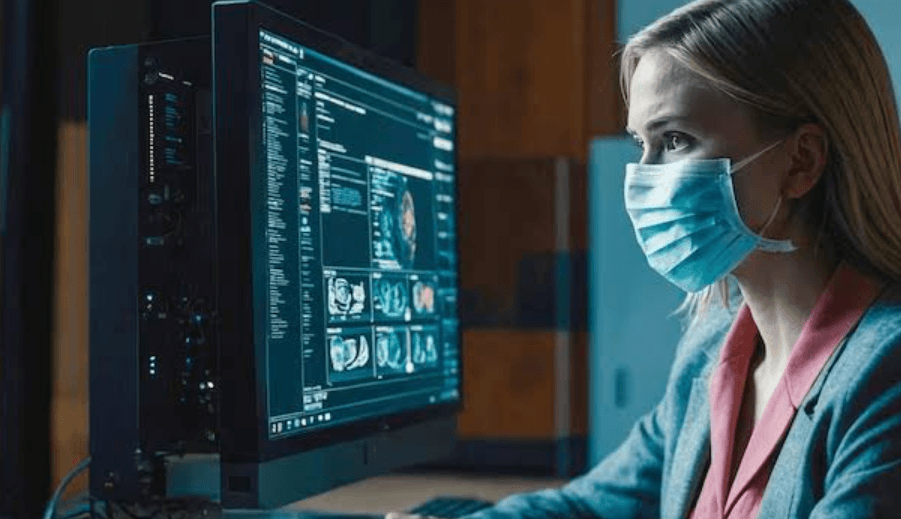
Imagine handing a brand-new employee a stack of patient charts on their very first day and asking them to bill every encounter correctly, without any training on your specific specialty, your hospital’s documentation style, or the dozens of payer-specific quirks that affect reimbursement. That’s roughly the challenge facing any AI system asked to fully take over medical coding today.
That framing helps explain why the question “will AI take over medical coding” keeps surfacing in industry conversations, and why the honest answer is more nuanced than either the alarmists or the skeptics tend to suggest.
The Case for “Yes, Eventually, Partially”
AI has made real, measurable progress in healthcare broadly, from analyzing diagnostic imaging to assisting drug development research. In medical coding specifically, AI tools can now scan clinical notes, extract billable information, and suggest appropriate ICD-10 and CPT codes with increasing speed and consistency. For high-volume, relatively standardized encounters, this represents genuine progress: faster processing, fewer fatigue-driven errors, and improved efficiency across routine coding workflows.
That progress is real. It’s also bounded by specific, persistent limitations that keep full automation out of reach for the foreseeable future.
The Case Against Full Takeover
Medical records are inherently messy. They blend structured data with handwritten notes, local clinical jargon, and provider-specific shorthand that varies considerably across specialties and individual clinicians. AI systems lack the contextual, real-world reasoning that allows an experienced human coder to interpret ambiguous documentation correctly.
Healthcare regulations also shift constantly, requiring continuous updates to keep automated systems compliant and current. Strict privacy requirements around patient health information add another layer of necessary human oversight, since handling protected health data carries legal and ethical obligations that can’t simply be automated away.
And then there are the genuinely complex cases, the ones that fall outside standard coding patterns. These require a kind of creative, contextual problem-solving that current AI systems consistently struggle to replicate, no matter how sophisticated the underlying model.
Why the Question Itself May Be Slightly Off
Framing this as a binary, takeover-or-not question obscures what’s actually happening in the field. The more accurate description is augmentation: AI increasingly automates the routine, repetitive, pattern-recognizable portion of coding work, while human coders focus their expertise on complex cases, compliance oversight, and quality review of AI-generated suggestions.
This isn’t a hypothetical future state. It’s already how many AI-assisted coding tools function today. The AI handles a fast first pass through clinical documentation. The human coder reviews, validates, or corrects those suggestions before claims are finalized and submitted.
Looking at the Historical Pattern
Major shifts in medical coding tend to unfold gradually rather than overnight. The implementation of ICD-10 took nearly two decades from initial development to full industry adoption. That slow, deliberate pace reflects how cautiously healthcare approaches changes touching reimbursement, compliance, and patient data simultaneously. There’s little reason to expect AI-driven changes in coding to move dramatically faster, particularly given the trust-building required before clinicians and compliance teams fully rely on AI-generated recommendations.
What Industry Experts Generally Expect
Most informed predictions in this space don’t describe a future where AI eliminates the coding profession. Instead, they describe an increasingly significant role for AI within coding workflows, growing steadily over time, while human expertise remains essential for context, judgment, and final accountability. This gradual evolution gives organizations and staff the runway needed to adapt and develop new skills, rather than facing an abrupt, disruptive transition.
See also: How Free Solitaire Encourages Healthy Digital Downtime
Practical Implications for Coders and Healthcare Organizations
For coders, the practical response isn’t panic; it’s adaptation. Building comfort with AI-assisted tools, developing strength in reviewing and validating AI suggestions, and deepening expertise in complex or ambiguous cases all position coders well for where the field is genuinely heading.
For healthcare organizations, the implication is similarly practical: solutions that combine AI-powered suggestions with human-reviewed oversight tend to outperform either pure manual coding or pure automation alone. This is exactly the model behind tools like AI-powered charge capture, which scan clinical documentation for billable activity and coding recommendations while keeping human judgment in the loop for accuracy, compliance, and complex-case handling.
The Realistic Bottom Line
AI is not on a near-term path to fully take over medical coding. It is, however, already reshaping the day-to-day work of coding, absorbing routine tasks and shifting human attention toward judgment-intensive review. That’s a meaningful transformation, just not the wholesale replacement the headline question implies.